
Prices, ratings and photos on this shelf are read off the live listings by hand, room by room.
Every doll on this shelf cries real tears, and no two of them cry for the same reason. A cry baby doll is not one invention repeated forty times: there are exactly two mechanisms in the whole collection, one on batteries and one on water alone, and once you can tell them apart the listings stop being confusing and start being useful.
The twelve-inch vinyl babies — everything on the Nursery Floor and the big Disney babies in the Storybook Suite — hold water in a reservoir behind the face and run a small pump on batteries. A sensor in the mouth notices when the pacifier is gone. The pump pushes water up to two holes at the inner corners of the eyes, and a light behind each eye switches on so the tears glow as they run.
This is why those dolls stop crying when the pacifier goes back in, and why some of them also stop when you lay them down: the same board that drives the pump is listening to a tilt switch. Fill the reservoir through the bottle that comes in the box, never under a tap, and empty it before the doll goes into a cupboard for a month.
The light is the part that varies from doll to doll, and it is the only thing most listings actually brag about. Charlie and Blake cry plain lit tears. Lilly's eyes fill with stars. Bella and Emma show hearts while they cry and clap their hands when they stop. Jenna's eyes open and close on a little motor, and Coney's shut by themselves when she is laid flat. None of that changes how the water gets out; it changes what a child sees while it happens, which is why two babies with identical mechanisms feel like different toys.
Batteries live behind a screwed panel, usually in the back or under the nappy, and they are the AA or AAA cells you already own rather than anything exotic. Two habits keep these dolls alive for years: empty the water out when the game is over, and take the cells out before a long spell in a cupboard. A reservoir left full is what turns a loved baby doll toy into a doll that smells of pond, and a leaking cell is the only failure these bodies cannot survive.
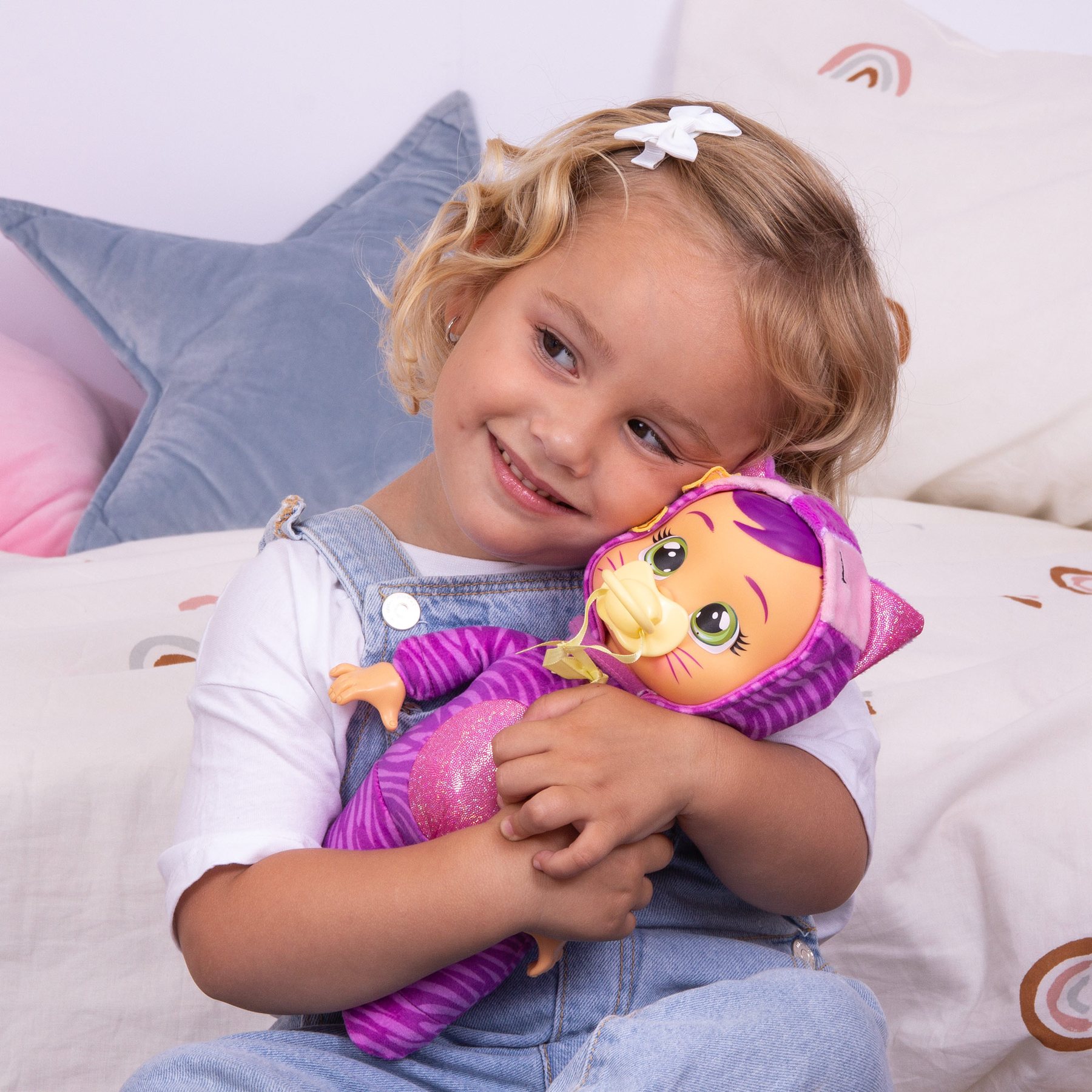
The soft Tiny Cuddles babies, the Cuties and every mini doll from a capsule work without any electronics. There is a bladder in the head with a filling hole on top. You add tap water, then press the head or squeeze the belly, and the pressure sends water out through the eyes.
Nothing to charge, nothing to break, and the tears come exactly when the child decides they should. The trade-off is that the doll is damp inside — squeeze the water out and leave her upside down for an hour before she goes to bed with anyone.
For the capsule babies the bottle does the filling. You put water in the magic bottle, hold it to the doll's mouth until it empties, then squeeze her belly and the tears arrive. It is the same plumbing as the plush babies with a different entrance, and it is deliberately a two-step game: feed first, cry second. Children work that out in about a minute and then do it two hundred times, which tells you most of what you need to know about why this collection sells.
Because there are no electronics in either kind, these are the dolls that suit the youngest children and the ones that end up in bed. Soft bodies cannot go in a washing machine — the bladder sits inside the head — so clean them with a damp cloth and let the clothes, where the clothes come off at all, dry on their own. A plush baby treated that way outlasts every battery doll in the house.
The crying is only the first layer. Across the collection the same water gets reused as a key: Magic Tears dolls drip tears onto a mirror in a playset and a hidden picture appears, into an oven and the house lights up, onto the star on a roof and it glows. The Jumpy Monsters series swaps water for slime, which does the same job and stores in the vehicle.
If a listing promises an activation, it means the set has somewhere specific for the tears to go. That is the one feature photographs never show, so every card that has one spells it out in words.
Which mechanism you want comes down to the age of the child and the hour of the day. A baby with a pump, lights and twenty sounds is a wonderful toy at three in the afternoon and a menace at seven in the evening; a plush baby with water tears is the one that gets taken to bed, and the one a child of eighteen months can work without help. Girls and boys who already own one of each tend to use them for completely different games, which is the honest argument for owning both rather than upgrading.
Whatever you buy, treat the water as the part that needs looking after. Tap water only, out again when play stops, nothing hot, no bubble bath and nothing sticky — the one exception being the slime that comes with the Jumpy Monsters, which belongs in the vehicle it arrived with and nowhere near a head. Do that much and a doll from this collection stays a working toy for as long as the child loves it, which is usually longer than anybody expects.
If you are buying a cry baby doll as a gift and you will not be in the room when it is opened, choose the water mechanism. A cry baby doll that needs no batteries cannot arrive flat, cannot be put aside until somebody finds a screwdriver, and works the first time a child squeezes her. The battery babies are the better toy once they are running, but they ask for an adult, a set of cells and five minutes before the first real tear. Children old enough to fill a bottle on their own will not care either way; younger ones, and the adults buying for them, will.