
Prices, ratings and photos on this shelf are read off the live listings by hand, room by room.
The age printed on the box of a doll that cries real tears is not a marketing decision, it is a count of how many loose pieces are inside and how much the child has to do to make the tears happen. Here is what each step up actually gets you, room by room.
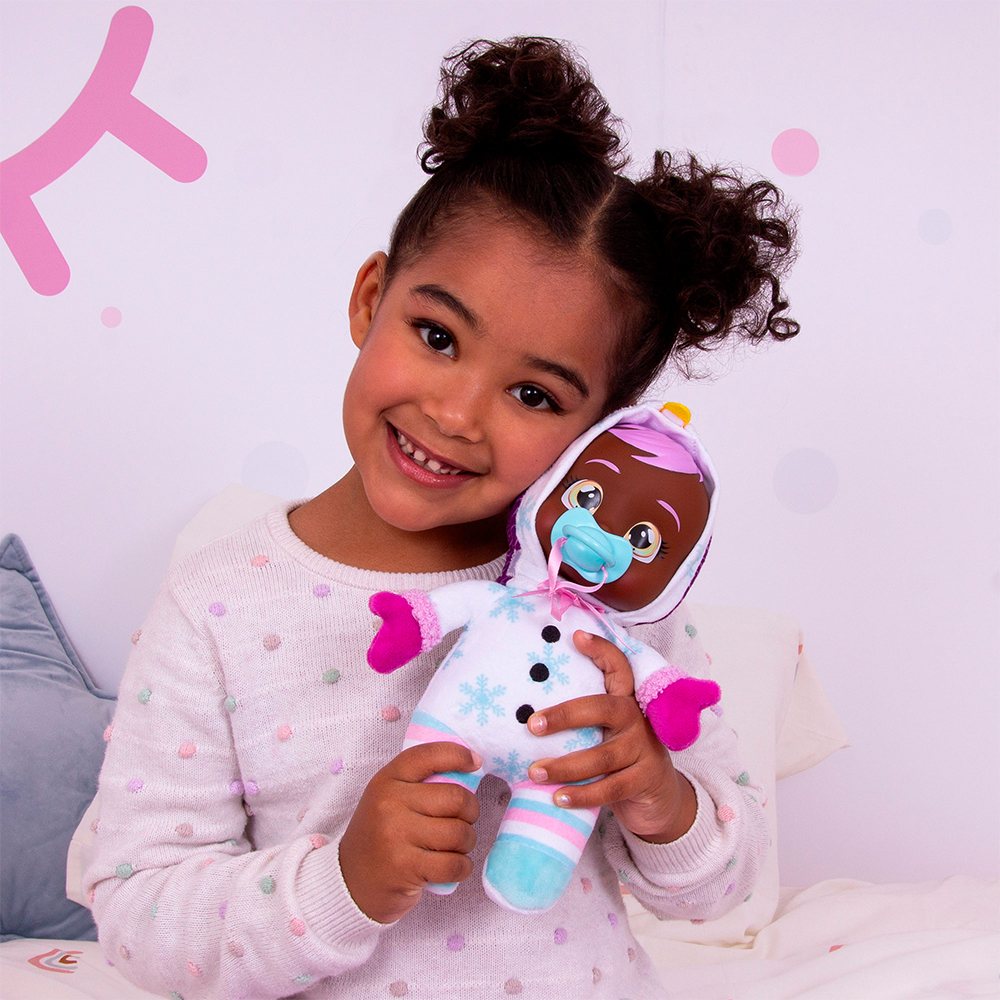
Start in the Crib. A Tiny Cuddles baby is plush from the neck down, weighs almost nothing, and arrives with one removable piece — her pacifier. Her tears need tap water and a squeeze, so there is no battery door for small fingers to find.
The gentler interactive babies are also marked 18 months and up: a pacifier, sometimes a bottle, and sounds. What makes them suitable at that age is that the features happen to the child rather than needing to be operated by them.
What an eighteen-month-old gets out of a cry baby doll is the comforting, not the collecting. She will carry the baby by one arm, put the pacifier in the wrong way round, and love her anyway. Look for a soft body, sewn-on clothes and one loose piece; avoid anything with a wardrobe, a mirror or shoes the size of a thumbnail. Boys of this age play exactly the same way, and the box markings make no distinction between girls and boys. If you are buying a first baby doll toy as a gift and you do not know the child well, this is the safest end of the whole collection: there is nothing to swallow, nothing to break and nothing to lose.
At three the play turns into a sequence, and the collection follows. The feeding and walking babies want a decision from the child — which food, which hand to hold. The morning-routine dolls ask for three tasks in order and clap when each one lands. The surprise capsules arrive with seven to nine separate accessories, which is exactly why they are not marked lower.
This is also the age where collecting starts to mean something. A child who can remember that she already has Dotty and still needs Lady will get far more out of a capsule than a younger one who simply likes the unwrapping.
Three is also where the eyes start to matter. The interactive babies do different things with them — one fills with stars, another with hearts, a third shuts her eyes when she is laid down flat and opens them when she is picked back up — and a three-year-old notices the difference and picks a favourite because of it. The water routine fits this age too: fill the bottle, feed the doll, pull the pacifier, wipe the tears, start again. It is a loop a child can run on her own, and running it on her own is the point. Toys that need an adult at every step get played with once.
The BFF fashion dolls on the Fashion Landing are marked four and five plus, and they earn it. Two outfits, shoes, socks, a bag, a headband and a necklace per doll, all of it small enough to vanish into a carpet. The reward is real posing and real dressing, because the joints and the clothes are both made to be worked.
Playsets land in the same bracket. Dreamy's Mega House has more than twenty-five accessories and an elevator — wonderful at five, overwhelming at two. The Baby Paws puppy in the Pet Nook is also a 4+ box despite being entirely soft.
One last thing about the top of the range: a four-year-old who is already looking after a doll does not stop wanting a baby. The mistake is to treat the fashion dolls as the upgrade and sell the old baby doll toy at a yard sale. Children who own both use them for different games — the baby is cared for, the fashion doll is dressed and sent somewhere — and the collection only really works when the two live on the same shelf. If the child is old enough to keep a set of tiny shoes in one place, she is old enough for everything in the house, and a wardrobe makes a better gift than a fifth capsule.