
Prices, ratings and photos on this shelf are read off the live listings by hand, room by room.
Three things the boxes never explain properly about dolls that cry real tears: how the tears are actually produced, which doll belongs to which age, and how the surprise capsules are built to be collected.
 How a Cry Babies doll cries real tearsEvery doll on this shelf cries real tears, and no two of them cry for …
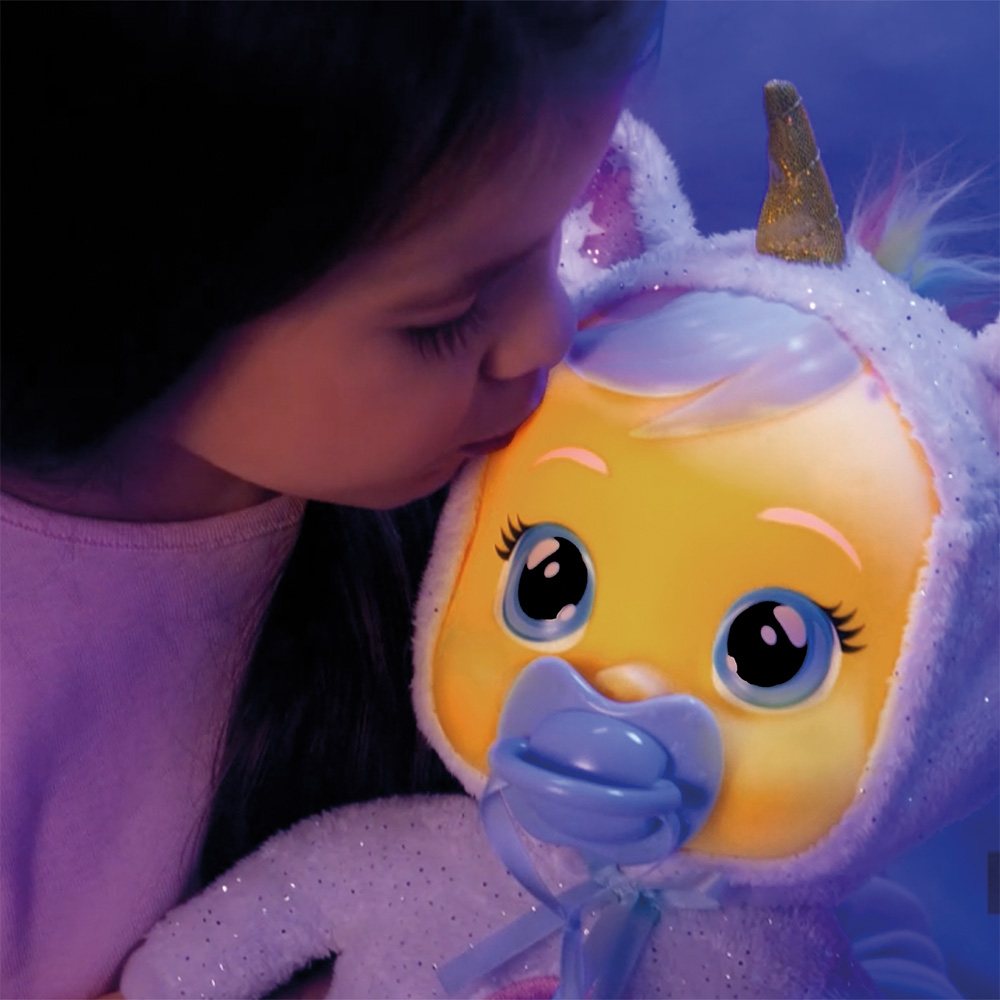 Choosing a doll that cries real tears by ageThe age printed on the box of a doll that cries real tears is not a ma…
 Collecting the mini dolls that cry real tearsA capsule is a lottery ticket with a doll inside, and the collection i…
A cry baby doll looks simple in a photograph and turns out to be three or four different toys once you start reading the listings. One baby runs on batteries and lights her tears from inside. The next one has no electronics at all and cries because a child squeezed her. A third is three inches tall, arrives sealed in a shell and shares her clothes with eleven other minis. They are photographed the same way, described in the same words and sold next to each other, and nothing on the box tells you which kind you are looking at.
These notes exist because I could not tell them apart either. I wrote the first one after buying a baby doll toy for a three-year-old and discovering, in the middle of a birthday party, that the tears needed four cells and a screwdriver nobody had. The second one came out of a longer argument about ages: the number on the box is not a guess at maturity, it is a count of how many loose pieces are in the set. The third is about the capsules, which are the cheapest way into the collection and the easiest way to end up with fourteen dolls and nowhere to put them.
Read them in whatever order suits the question you arrived with. If you want to know what actually happens inside the head of a doll when her eyes start to run, start with the mechanisms. If you have a child of a particular age and a budget, start with the age note — it will save you from the most common mistake in the whole house, which is buying up rather than buying right. If somebody has already brought home one capsule and asked for another, the collecting note explains what the pool is, which characters are deliberately rare and why a second shell feels better than the first.
What these notes will not do is rank the dolls for you. There is no best cry baby doll, because the thing that makes one of them right is what a particular child wants to do in an afternoon. A child who wants to cuddle needs a soft body and sewn-on clothes. A child who wants to run a nursery needs a set of minis and somewhere for them to live. A child who loves getting things out of boxes wants the capsules and will be bored by the biggest doll on the shelf. Girls and boys both play all three ways, and the boxes make no distinction between them either.
Everything in the notes comes from the listings, the boxes and the dolls themselves — heights, mechanisms, what is in the set, what the age marking is really about, how the water is meant to be handled. Where owners disagree with the marketing, I have said so. Where I do not know, I have left it out rather than guessed. The one piece of advice that runs through all three is dull and worth repeating: tap water only, out again when play stops. A doll old enough to be loved for two years is a doll that never spent a month in a cupboard with a full head.
If you would rather look than read, every room of the house is one page and every doll in it has a card with her real height, her mechanism and the photographs from her own listing. The notes are here for the questions a photograph cannot answer.