
Prices, ratings and photos on this shelf are read off the live listings by hand, room by room.
A capsule is a lottery ticket with a doll inside, and the collection is designed to make you buy another one. Every mini in these shells is a cry baby doll in miniature — fill her with water, squeeze, and she cries real tears like her twelve-inch sisters. Here is how the series are actually built, so you can decide how far in to go.
Each series has a fixed cast — usually twelve or more mini dolls — and at least one character the listing openly calls rare. Dress Me Up hides Sydney in the pool. Icy World goes further and advertises both a rare and an ultra rare. You cannot influence the draw, and no seller can tell you which capsule holds which doll.
The honest way to buy them is one at a time, as a small treat, rather than as a project. If the project is the point, look at Talent Babies instead: that series ships in transparent packaging specifically so you can pick the character you are missing.
It helps to know what you are drawing for. Every character in the pool is the same baby doll underneath: three inches of hard plastic, painted eyes that do not open, a hole in the top of the head for the water and a soft belly to squeeze. What changes between them is the face print, the hair and the clothes. A child who wants a doll to cuddle will be disappointed by any of them, because a mini is a toy for arranging rather than for holding; a child who wants to play at running a nursery will take twelve of them and give each one a name. Both girls and boys collect these, and the box carries no suggestion otherwise.
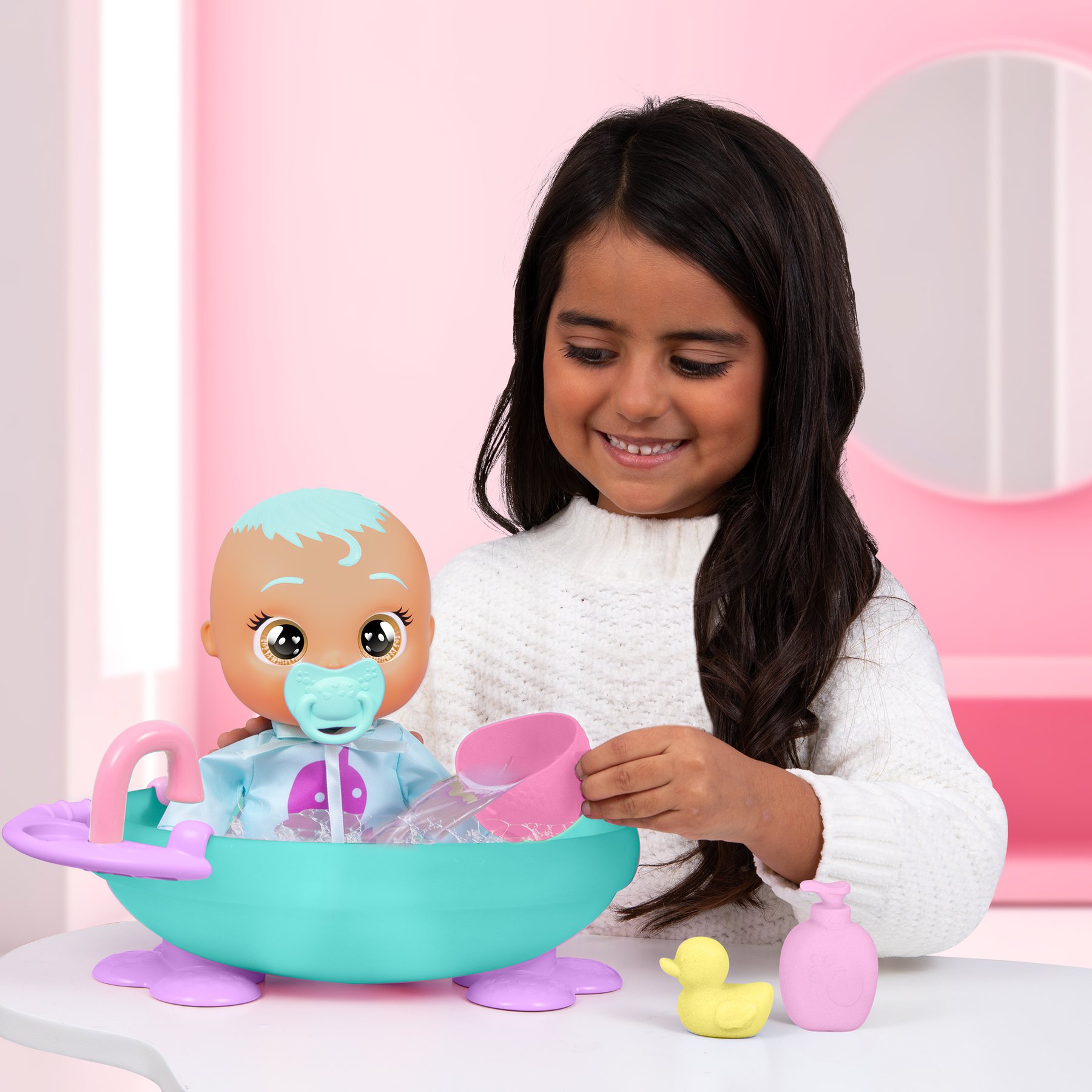
The doll is rarely the biggest part of the value. A standard capsule holds a magic baby bottle, a pacifier, a piece of clothing, a pair of shoes, a mirror or a hanger and a sticker sheet. The clothes are fabric and the dolls are a shared size, so everything mixes between characters — which is the real reason a second capsule feels better than the first.
Series change the extras rather than the doll. Icy World swaps clothing for coats, gloves and snow glasses. Jumpy Monsters adds a bouncing vehicle and silicone outfits on more articulated bodies. Little Changers put the whole thing inside a recyclable flower with a boat, a duck and swans to spin.
The water part is the one people get wrong. The magic bottle is not a decoration: you fill it, press it against the doll's mouth to feed her, and only then does squeezing her make the tears come. Tap water, nothing else, and tipped out when the game ends — a mini left full for a fortnight smells of pond and no amount of rinsing fixes it. The Jumpy Monsters are the exception that proves the rule: they cry slime from a sachet, the slime belongs in the vehicle it arrived in, and it does not belong in the head of any other doll in the set.
Capsules stack up fast, and the Playset Parlour exists because of it. Most shells reclose into a tiny room, so the first few dolls can live in their own packaging. After that a furnished set earns its place: Chloe's kitchen or Kristal's igloo for a single scene, Coney's two-in-one house for something with wheels, Dreamy's Mega House if the collection has got out of hand.
Every one of those sets includes a doll you cannot buy separately, which is the quiet reason collectors buy playsets they do not need.
As a gift, a capsule is a strange object: cheap enough to be an afterthought and exciting enough to be the thing a child remembers from the whole day. The trick is not to send one alone. A capsule with a furnished set, or a capsule alongside a soft baby from the Crib, gives the mini somewhere to live and somebody to belong to. On its own it is five minutes of unwrapping and then a small doll on a windowsill. Children old enough to keep track of a collection love them more than any other part of the house; children who mostly want something to hold are better served by an ordinary baby doll toy with a cloth body, and the capsules can wait a year.